

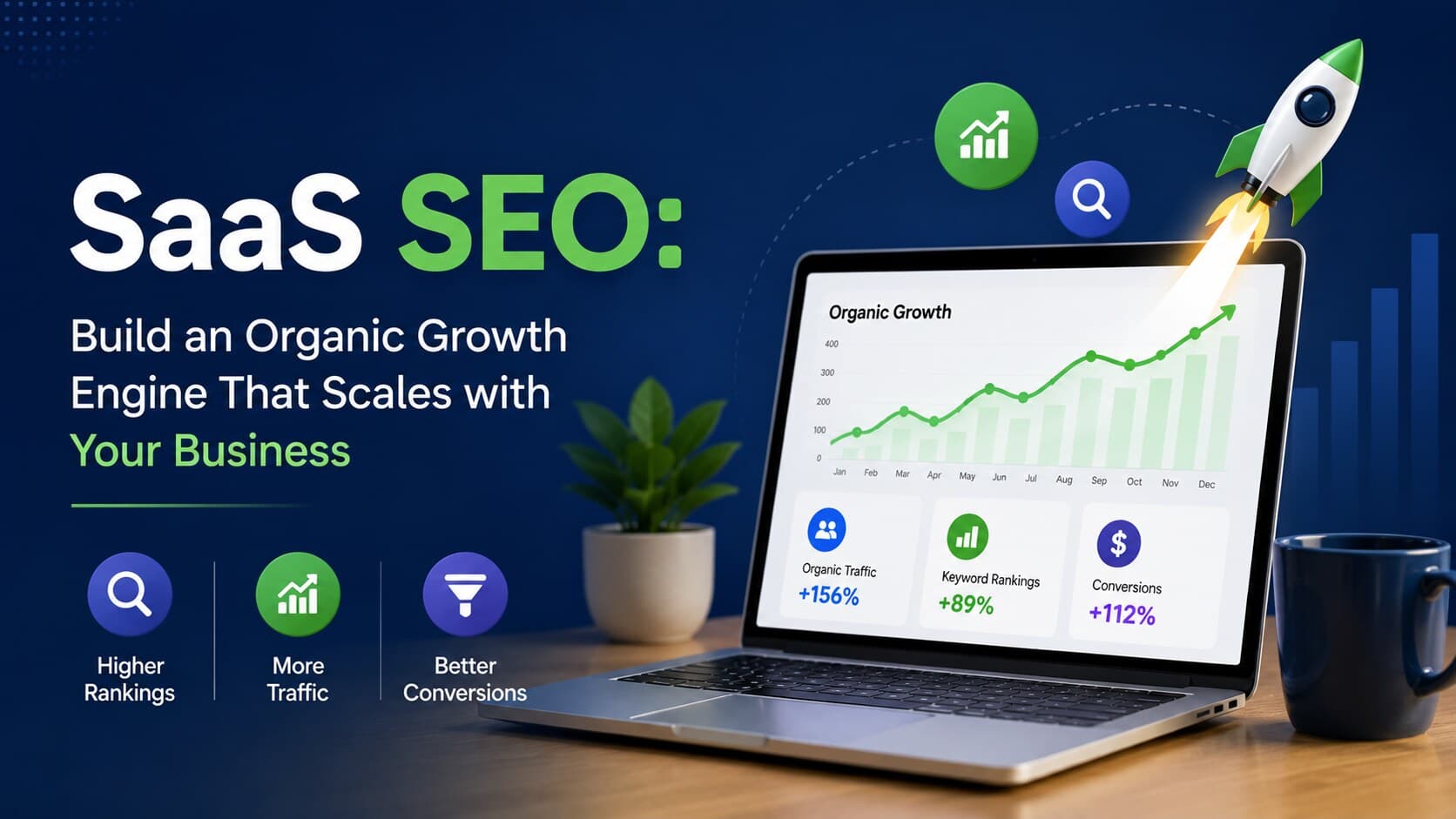
SaaS SEO is the practice of applying the concept of SEO in attracting organic traffic, getting free trial sign-ups and reducing cost of acquisition for software companies. It involves keyword research, content creation based on buyer’s journey, technical optimization and link building. As opposed to conventional SEO, SaaS SEO revolves around product-led keywords, comparison pages and longer sales cycles. An effective SaaS SEO strategy usually takes about three to six months before the desired outcome is realized. The following is an all-rounded approach to creating such a strategy.
Eventually, most SaaS founders find themselves at a particular point. Paid advertising works but leads to escalating cost per lead and the traffic dries as soon as funding ends. SEO is the only channel that yields long term benefits and although takes time to bear fruit, when your pages rank, they keep bringing in leads day in day out without a penny being spent on clicks. This guide takes you through the entire process of creating an SEO machine that stands the test of time starting from the very first keyword research to backlinks acquired months later.
What Is SaaS SEO?
SaaS SEO is the process of optimization of website, content, and technical elements of software company's website in order to make it rank better on search engines for the keywords that its potential customers type. It is not only about getting visitors. It is about getting the right visitors who are at the appropriate stage of their consideration of making a purchase and turning them into either a user of a free trial or customer.
Understanding SaaS SEO and How It Works
The principle of SaaS SEO is mapping out search intent to the content. The person who searches "what is project management software" is in a totally different state than the one who searches "Asana vs Monday pricing". A decent SaaS SEO plan will identify those intents and create pages for them, connecting them all together through links and technical aspects so that search engines believe that the website is worthy to be ranked.
Why SaaS Companies Need SEO for Sustainable Growth
As SaaS firms rely on recurring revenue, acquisition cost becomes one of the most important metrics. In certain competitive industries such as CRM, HCM, or marketing automation, paid channels tend to grow quite costly. The SEO approach allows acquiring users sustainably by not allowing the acquisition cost to grow month by month. That is critical for the sustainability of subscription-based models.
How SaaS SEO Differs from Traditional SEO
Regular SEO strategies typically revolve around local SEO, product listings, or general information-related content. SaaS SEO involves longer sales cycles, several decision-makers and specific buyer personas, including IT manager, marketing director, or finance department. Also, the SEO strategy will focus on comparison content, use case pages, and free tools, because SaaS users tend to spend weeks researching products before committing.
Key points:
- Mapping content to search intent rather than traffic generation only
- Focusing on recurring revenue and customer lifetime value
- Being aimed at multiple decision-makers during longer buying process
- Leveraging comparison pages and use case content extensively
Why SaaS SEO Is Essential for Business Growth
Increase High-Intent Organic Traffic
Being found through search engines means getting people that have a clear intention of finding a solution similar to yours. It works much better than running generic display ads since the user already has a certain intent at the time of searching.
Generate Qualified Leads and Free Trial Signups
The more relevant the answer is to the buyer’s question, the closer the person is to becoming a lead and signing up for a trial. Optimizing landing pages and blogging effectively helps generate leads and trial sign-ups without investing in any more ads.
Reduce Customer Acquisition Costs (CAC)
SEO generates organic traffic without any ongoing costs unlike paid search, where each visitor costs money. In the long term, SEO helps bring down CAC greatly, which positively impacts your unit economics.
Build Brand Authority and Trust
Your presence as a thought leader in the category in guides, comparisons, and industry content helps establish your brand as a credible one.
Drive Long-Term Recurring Revenue
As SaaS revenues are based both on acquiring new customers and retaining existing ones, SEO content helps in educating users, inboarding them, and keeping their churn rates low. Blogs, help documentation, and use cases not only engage your existing users but can attract new ones as well.
Why it matters:
- Generates higher intent traffic compared to other paid channels
- Reduces customer acquisition costs in the long run
- Gains long-term brand authority and builds buyers' trust
- Assists in retaining users as well as acquiring new customers
Build a Winning SaaS SEO Strategy
Define Your Target Audience and Buyer Personas
Before working on keywords, you have to clearly understand your target audience. The content for a B2B SaaS application which targets enterprise IT departments would be completely different from that of another application which targets individual marketers. Understand your personas and map out their problems and the queries they might use to search on Google.
Conduct Keyword Research Based on Search Intent
It goes without saying that volume is not a factor in keyword research for SaaS. You should aim at aligning your content strategy with people's intent. Segment keywords into informational ("what is SaaS SEO?"), commercial ("top SaaS SEO tools"), and transactional ("SaaS SEO agency") categories, and create relevant content accordingly.
Create a Content Strategy That Supports the Customer Journey
The content strategy of SaaS companies should reflect the way their clients make buying decisions: awareness, consideration, and decision. This will include creating blog posts at the top of the funnel, comparison pages at the consideration stage, and case studies or pricing pages for the decision-making phase. And if you're new to the game, start off with this guide to SaaS companies ranking with SEO.
Build Topic Clusters and Pillar Pages
Rather than just posting random articles, you need to organize your content into clusters. You can have one pillar post on the topic of "SaaS SEO" that links to all the other pieces of content dedicated to keyword research, technical SEO, and link building, and all the related content backlinks to the pillar page.
Strategy checklist:
- Create buyer personas before choosing keywords
- Categorize keywords based on intent - informational, commercial, transactional
- Develop content for each step of the buyer’s journey
- Build topic clusters with pillar pages
Optimize Your SaaS Website for Search Engines
Improve Technical SEO Performance
Many factors such as page speed, mobile-friendly pages, crawlability and good site architecture can impact your rankings. SaaS websites, which are usually built using heavy JavaScript framework, are known to suffer from rendering problems, which in turn prevents search engine bots from crawling these pages and ranking them appropriately. A technical audit is essential in order to prevent any such ranking issue.
Optimize Product and Landing Pages
These pages are the backbone of SaaS SEO strategy; treat them as such and optimize them accordingly. Make sure that your product and feature pages contain necessary keywords, meta titles and descriptions and each of them answers a certain buyer’s question.
Strengthen Internal Linking
Internal linking is helpful in directing users and search engines within your website. The linking of your blog posts to product pages and guides will distribute link authority within the site while enabling users to discover similar resources. For instance, a post on growth strategies for SaaS can be linked to a page discussing lead generation for SaaS teams.
Enhance User Experience and Core Web Vitals
The search engine considers user experience when ranking sites. User experience is determined by loading speed and page stability. A site with slow load speeds and poor designs will force the user to leave your site even without going through your content. The removal of unneeded JavaScripts and image compression are some of the practices that will help you rank higher.
On-site checklist:
- Fix Crawl issues and broken links and pages that have slow load times
- Optimize landing pages and product pages like any other SEO asset
- Internal linking of similar pages within the website
- Core Web Vitals Optimization
Create Content That Drives Organic Growth
Publish Educational Blog Content
Questions that address typical inquiries in your industry make people trust your company and attract people at the top of the sales funnel. In other words, you do not necessarily have to market your product via blog posts. They will rather be educational and help users come across the idea of purchasing your products.
Build Comparison and Alternative Pages
Pages with titles such as "X vs. Y" and "the best alternatives to X" are among the most converting types of content on SaaS websites because a person who views the page is looking for a comparison. The page has to be comprehensive and unbiased.
Develop Use Case and Industry Pages
Software is utilized differently in different industries. For example, a project management solution employed by marketing companies is completely different from the same solution used by construction companies. It makes sense to create separate use case pages for your segments.
Showcase Case Studies and Customer Success Stories
The most persuasive content type you can post is the result of work done. Case studies are SEO content and sales enablement material because prospects are looking for evidence of successful projects during their final stage.
Content types that work:
- Educational blog posts for top-of-funnel awareness
- Comparison and alternative pages for consideration-stage buyers
- Use-case and industry pages for niche search terms
- Case studies and customer stories for decision-stage proof
Strengthen Your SaaS SEO with Link Building
Earn High-Quality Backlinks
Backlinks continue to be a highly ranked signal. It pays more to focus on getting quality links from relevant and reputable websites within your industry than on quantity. A few good links from a credible source matter more than many links of poor quality.
Use Digital PR to Build Authority
When you do research, data studies, and publish industry reports, it usually attracts media attention and backlinks. In case you have product usage data in your possession, publishing it as an industry report could become one of the most linked to your assets ever.
Leverage Guest Posting and Partnerships
Guest blogging through posting quality articles in other reputable blogs, or engaging complementary SaaS tools in co-marketing activities will prove to be effective in acquiring quality backlinks and building brand awareness. Look for partners who share your target audience.
Monitor and Improve Your Backlink Profile
Keep an eye on your backlink profile to detect spammy or broken links affecting your website negatively. This process will help you increase your authority. The tools to assist you in monitoring your backlinks include Ahrefs or Semrush.
Link building priorities:
- Focus on quality rather than quantity of backlinks
- Make sure the data and research used for digital PR is unique
- Establish relationships via guest blogging and partnerships
- Perform regular audit of backlinks to avoid toxicity
Measure and Improve SaaS SEO Performance
Track Organic Traffic and Rankings
Watch out for those pages that have an increase or loss of organic traffic and ranking positions over time. That way, you will know what kind of content needs to be updated and where to focus your efforts on.
Monitor Conversion Rates and Lead Generation
Simply having a lot of traffic is not enough to make any money. You need to monitor how many of those organic visitors become trial users, demo requests, and actual paying clients.
Analyze User Engagement Metrics
This includes such metrics as bounce rate, time on page and scrolling. They will help you understand whether the page really works or not. People visiting it and then leaving right away means something is wrong with the content.
Refine Your SEO Strategy with Performance Data
SEO is not a one-shot strategy. You need to use your performance metrics each quarter to make changes to underperforming articles, emphasize successful elements, and shift your keywords according to your product/market development.
Metrics to track:
- Organic traffic and keyword ranking progress
- Percentage of signups from organic visitors
- Various engagement metrics such as bounce rate and average time spent on a page
- Quarters' performance analysis to make adjustments to your content strategy
Common SaaS SEO Mistakes to Avoid
- Choosing the Wrong Keywords — Focusing on popular but irrelevant to your business and users' intent keywords can be a waste of time with little-to-no chance of success.
- Ignores SEO Technical Issues — Broken links, loading speed issues, and indexing problems silently destroy your ranking despite excellent content quality.
- Publishing Invaluable Content — Content that provides nothing new and unique but aims only at filling up space will never rank or bring any results.
- Poor Internal Linking — Pages with no backlinks won't build their reputation and won't lead users deeper in your website.
- Not Updating Old Content — Outdated numbers and screenshots show that page is abandoned.
Best SaaS SEO Tools for Faster Growth
- Keyword Research & Competitor Analysis Tools – Ahrefs, Semrush, and Google Keyword Planner will provide insights into buyer queries and the keywords that your competitors are currently ranking for.
- SEO Technical Audit Tools – Screaming Frog and Google Search Console will be able to detect any crawl errors, broken links, and issues related to indexing.
- Content Optimization Platforms – Surfer SEO and Clearscope tools will assist with aligning your content with that which is currently ranking.
- Analytics and Performance Tracking Tools – Google Analytics and Looker Studio will convert traffic data into actionable insights.
Future Trends Shaping SaaS SEO
AI-Powered Search and Content Optimization
With the increased adoption of AI by search engines, they start summarizing responses directly on the search results page. As a result, a SaaS business needs to provide clear content with direct answers at the top of the page to have a chance to get summarized by the AI.
Topical Authority and EEAT
Google keeps rewarding the sites that show their experience and expertise in the particular topic. The creation of topical authority becomes an integral part of SEO strategies for SaaS brands.
Programmatic SEO for SaaS
The majority of SaaS businesses are currently leveraging templated and data-powered pages in an attempt to generate content at scale, either for use cases, integrations or product comparisons. If executed correctly, such tactic can result in covering thousands of long tail search queries by not writing content pages manually.
Search Experience Optimization (SXO)
SEO and User Experience (UX) become more and more interconnected. Nowadays it is not enough just to be visible on Google – it should also be fast loading, clean looking and lead users further down the funnel, whether it is signing up, booking a demo, or reading additional articles.
Conclusion
Creating a SaaS SEO machine requires consistent publishing of valuable content, solving technical issues on the site and earning authoritative backlinks over the period of months and even years. Those SaaS companies who invest their resources into SEO in the long term will be those who never have to worry about increasing cost of their ads in future. Start with creating your buyer personas and producing content based on people's intent, then improve your strategy accordingly to data. Nothing needs to be done all at once, and this is the whole point of SEO.
FAQ’s
1.What is SaaS SEO?
SaaS SEO is when you optimize your SaaS company’s website and content in order to achieve high placement on search engines by using targeted keywords that your target customers are using to search. SaaS SEO is the optimization process that helps attract the correct visitors to your website depending on the customer stage of buying process, from the point of discovery until the customer decides to test your software for free or pays for the product.
2.How long does SaaS SEO take to show results?
In most cases, SaaS SEO takes from three to six months in order to start achieving results in terms of ranking and traffic, depending on the complexity of your targeted keyword phrases. The duration depends on the age of your domain, the quality of your content, the technical side of your website and level of competition in your industry.
3.What are the best SaaS SEO strategies?
Combining intentional keywords research, topic clusters with pillar pages, proper technical SEO and consistent link building is an optimal approach. The pages that often have good conversions in SaaS include comparison pages, use cases, case studies. Combining the development of SEO content with regular tracking allows knowing what should be optimized, improved, written anew or abandoned.
4.How is SaaS SEO different from traditional SEO?
SaaS SEO works with longer and more complicated sales funnels that include several players unlike SEO campaigns with short buying process and often local searches. SaaS SEO relies more on comparison content, product pages and educational content targeted at certain personas like IT buyers or marketing leads since SaaS decisions require several weeks of preparation.
5.Should startups invest in SaaS SEO?
Yes, because it will help to establish their products better among target audiences in the long run. While SEO might require more time to bring conversions than PPC campaigns, it will prove to be more profitable for startups with limited budgets.